Designing and securing enterprise networks in high-compliance production environments. Multi-site architecture, zero-downtime migrations, and infrastructure built to survive an audit.
I started in IT at 17 and have been building, breaking, and rebuilding networks ever since. No traditional degree path, just hands-on work across managed service environments, enterprise infrastructure, and now a PCI CPP-compliant card production manufacturer where the stakes are high enough that getting it wrong has real consequences.
My day-to-day involves architecting networks across multiple production sites, working with layered security zone architecture in a compliance-heavy production environment, and leading the network portion of compliance audits. I care about infrastructure that's designed correctly from the start, not patched into compliance after the fact.
I'm also the kind of person who reads PCI CPP compliance documentation on a Saturday morning just to stay sharp, which either makes me exceptionally well-suited for this work or seriously in need of better hobbies. Probably both.
Based in Toms River, NJ. Currently open to network security engineering opportunities.
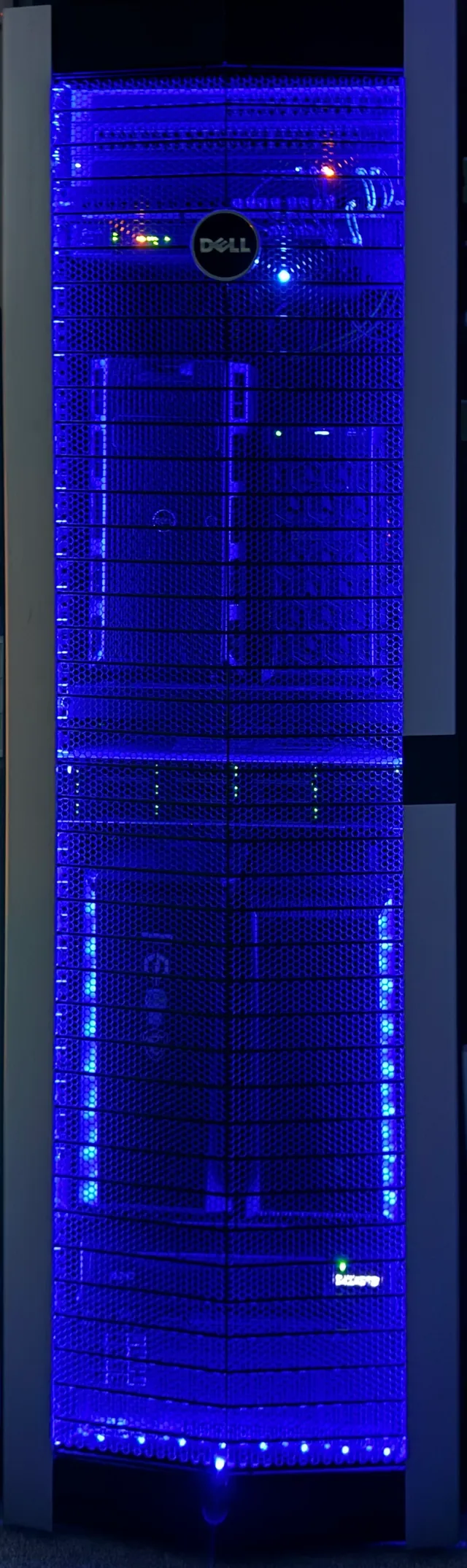
My home lab is not VLAN 1 on a consumer router. There is a full server rack in my home office that hums 24/7 and absolutely did not fit through the doorway without a brief moment of regret.
My real estate agent mentioned "home office potential." She did not specify what kind. I did not specify that I would be Googling load-bearing floor joist capacity before moving in a 7-foot rack. We have both chosen not to discuss it further.
The point of all of this is not to collect hardware. It's to make sure I'm never learning something for the first time on production equipment that matters. Every configuration I'm comfortable deploying at work has been destroyed, rebuilt, and documented here first.
The network runs on pfSense with full VLAN segmentation, IDS/IPS, and Cloudflare Zero Trust for remote access. No exposed ports, no port forwarding, no prayer-based security strategy. Compute is Proxmox hosting 50+ self-hosted applications across VMs and containers. Storage lives on TrueNAS Scale/CE with a 3-2-1 backup strategy that I have actually tested, because tested backups are the only kind that count.